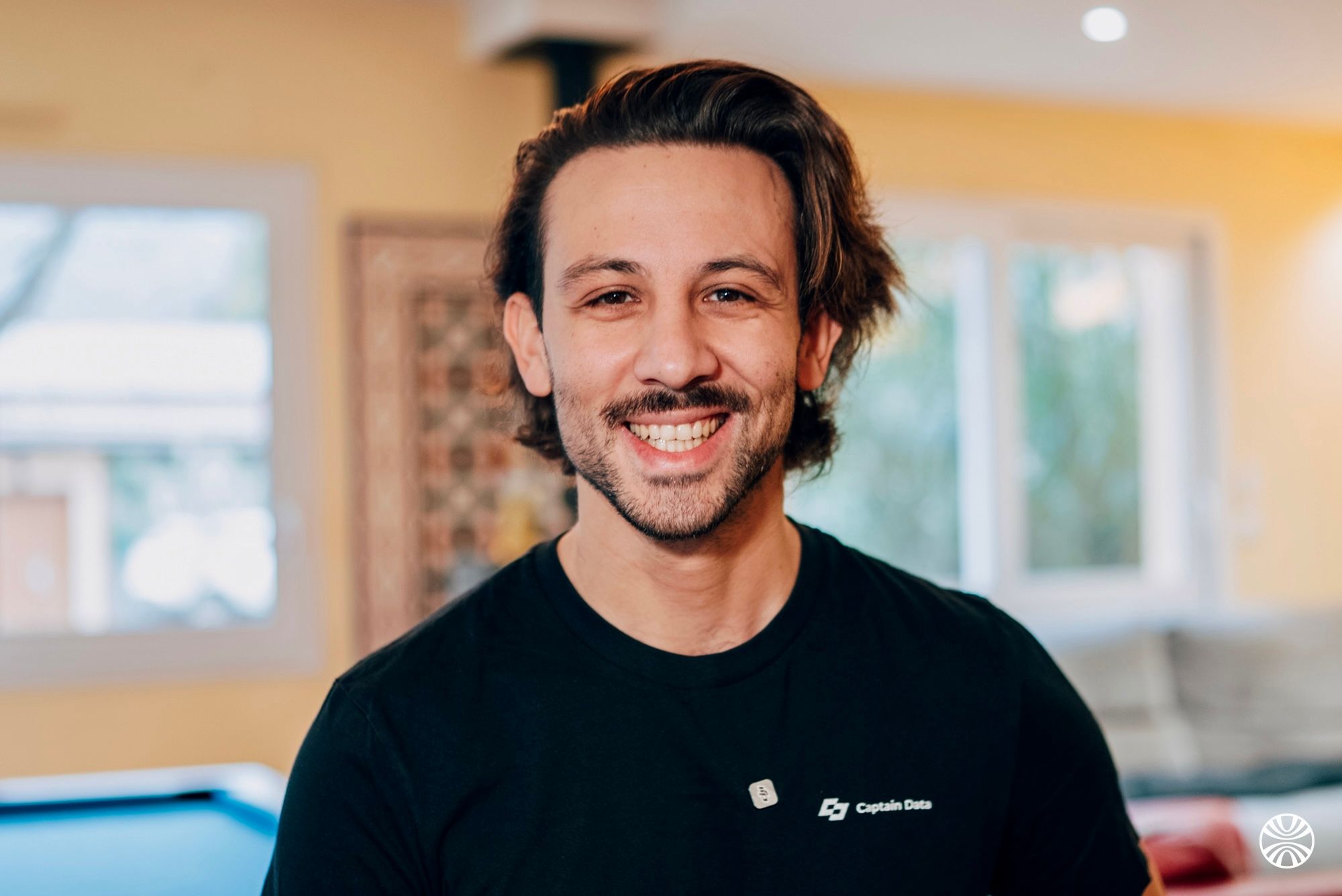
鈥� has been in the marketing industry for 20 years. During that time, he hasn鈥檛 only seen the transition from traditional to digital marketing play out; instead he鈥檚 been at the front lines, adapting his practices to both keep up with and take advantage of the new digital functionalities that are associated with successful marketing today. 鈥�
尤物视频 co-founder and CEO recently spoke with him about how the industry has changed, the arrival of new tech tools designed for marketers, what it takes to build a marketing & sales machine today, and much more. Enjoy!
GO: You鈥檝e been in the business for 20 years, from almost the beginning of online marketing. We know that lots of things have changed over the years, but why don鈥檛 we start with a different question: What鈥檚 remained the same?
GC: There are lots of things that have changed, that鈥檚 for sure. But there鈥檚 one thing that鈥檚 stayed the same, at least for how I see my job. I got into digital marketing because I love both technology and human psychology, and those two fields are still at the heart of what I do. Standing at the crossroads of technology and psychology has led me into growth marketing and leveraging code and digital tools to create better user experiences.
鈥�
GO: So let鈥檚 go into specifics on that last point: over the last 20, and even 10 years, your job as a marketer has changed a lot. When we talk about injecting engineering within marketing, what does that really mean?
GC: There have always been technology cycles. If we just look at the last 10 years or so, we went from an environment where you had the first few digital tools for marketers 鈥� things like Marketo and Hubspot, which became mainstream in the late 2000s 鈥� that let people who weren鈥檛 necessarily coders build fairly complex logic flows and nurturing sequences. From that starting point, two paths emerged, generally speaking. There鈥檚 the more complex, high-technology approach that鈥檚 pushing more and more complex logic capabilities into marketing, and then the more creatively- focused path.
That鈥檚 led to a separation of functions. Before you just had 鈥渢he marketing team鈥� and now you have a situation where there鈥檒l be one team that鈥檚 focused on brand and content, and another that鈥檚 more focused on driving revenue via demand generation. That second one is more high technology, it鈥檚 very KPI-driven, it鈥檚 keeping tabs on tons of data, outbound efforts, marketing operations, and overall: revenue operations.
GO: Revenue operations is one of the new functions that we鈥檝e seen growing recently. What鈥檚 going on there?
GC: Yeah, it鈥檚 very recent. Revenue ops has emerged in the last two or three years, it鈥檚 another indication of the kind of specialization that happened with the splitting of the two paths. And that鈥檚 entirely due to the fact that there鈥檚 simply more competition in every market. Everyone needs a lower CAC, everyone needs higher performance, and that pushes companies to create special functions that can optimize team performance within particular aspects of the business. The goal is always more predictability, giving you more revenue with lower costs.
鈥�
GO: It seems like something that should have been there before, no? What happened to push this kind of thinking into action over the last few years?
GC: I think that the challenge that marketing faced for a long time, and probably failed at in a lot of ways, was being able to predict what the outcome of their efforts would be and to be accountable - which is another way of saying 鈥渕easurable鈥� - for results. 10 years ago, marketing would just say 鈥淥h, we鈥檝e got X site visits, and Y leads,鈥� and that was about it. But those were vanity metrics, and that鈥檚 what most marketing teams were focused on. They didn鈥檛 have the tracking capabilities to figure out what was happening down-funnel, they didn鈥檛 look at conversion... Today though, nobody gets hired as a marketer with that mindset!
Today you have to understand and own the whole pipeline, pipeline dollars, conversion, time-to-close, you have a 6- or 12-month forecast, and you鈥檙e accountable for what happens with those goals!
That鈥檚 what鈥檚 really changed in the last 10 years: marketers today are responsible for building a predictable forecast.
鈥�
GO: So was it just that there are now better tools available? Things like Segment coming onto the market and all of a sudden giving businesses a better way of doing things?
GC: It鈥檚 true that there鈥檚 a tool aspect. Just sticking with the Segment example, it鈥檚 true that trying to figure out what was happening on the website before Segment was rough, Google Analytics wasn鈥檛 what you needed to be able to have the accountability I just mentioned.
But a lot of it is mindset. Competition grew, thousands upon thousands of startups launched, and there were a group of marketers that were forced to adapt. And they adapted in a way that pushed more data to be better structured and thus more usable.
Different tools will claim that the data they鈥檙e focused on is the key, and in a way they鈥檙e all right, simply because the underlying movement is structuring data so that it can be measured, synthesized, and easily exploited.
鈥�
GO: Take us through how that process looks today. You鈥檝e worked closely with Ramp, for example, what are the first steps that a company like that takes when looking to improve marketing ops?
GC: Honestly, there鈥檚 still a lot of work that has to be done. Even with all the tools out there, a company that鈥檚 scaling doesn鈥檛 just have a plug-and-play solution. But the fact that it鈥檚 a lot of work means that, for those few companies that do it really well, it becomes a real moat, a real competitive advantage.
A marketing team that has a real prediction on the companies they can reach, who they should try to close, who they should avoid wasting time on, what are the buying intents for all of those companies... It lets you be more focused and maximize your budget.
All this also means that you need some level of technical know-how, some engineering skills, that can connect the various tools that are available together in a way that fits your business. I don鈥檛 want an all-in-one solution that everybody can have, not because they don鈥檛 deliver in some ways, but because they don鈥檛 give me any competitive advantage!
The real way to win at marketing today is by building your own machine that maximizes different tools that are available on the market. In a highly competitive market, if you鈥檙e using the same tools and methods as your competitors, you can鈥檛 win.
鈥�
GO: So any one tool is just a good starting point?
鈥�GC: Exactly. Take ZoomInfo, it鈥檚 not that it鈥檚 not a good tool to get started, it鈥檚 just that what it delivers ends up being very generic. But as you scale, your customers are a multitude, and you have to adjust for that.
At Ramp, for example, we don鈥檛 just have one or two buying intents that we鈥檙e looking at, we鈥檝e got dozens. We aren鈥檛 getting information from one or two data vendors, we鈥檝e got seven or eight. All of this has to be pulled together, via marketing ops, to give us a competitive edge.
鈥�
GO: But that takes me back to the question, on a concrete level, how do you build it?
GC: You start with the most obvious and then you keep moving from there! You start at the bottom of the funnel 鈥� activation, sign up, looking at who drops off. If you鈥檝e got people who sign up but then stop, get that house in order by nurturing them and driving your conversion numbers up.
Then you take another step up your funnel, people who are on your site but not signing up. Then up again, and up again, until you鈥檙e really reaching for that TAM with people who aren鈥檛 aware of your company at all but they鈥檙e expressing certain buying intents that you can cover.
With messaging, it鈥檚 the same thing, you start with the bottom 鈥� usually email 鈥� and then work your way up, adding in ads, social, etc.
The goal isn鈥檛 to have a single block approach; you鈥檙e building a lasagna, you鈥檙e putting in layer after layer, all working together to form something great.
鈥�
GO: For a founder, how do they know that it鈥檚 time to start putting together that lasagna? When is the time right to find someone to run revenue ops?
GC: This is actually very important. Everything that I鈥檓 saying is meant for businesses that have found product-market fit and that are growing in competitive markets. If you spend time trying to build this kind of approach pre-product-market fit, or in an industry that requires education because people aren鈥檛 even aware that they have the problem, it鈥檒l be a gigantic failure.
But if you have product-market fit, if you鈥檝e got some brand awareness, if people can understand 鈥淎h, this is a better X鈥�, then this kind of marketing ops can be a huge boost. For example, for ecommerce merchants, Gorgias is a better Zendesk. It simply is! But your targets need to be able to quickly say, 鈥淚 get it!鈥�, and that鈥檚 something that comes only with PMF, when you鈥檙e able to start pulling on legitimate, predictable growth levers.
鈥�
GO: Any final takeaways? What鈥檚 your take on how marketing will look in 2025?
GC: More data, more automation, more technology. The flipside of that, let鈥檚 be honest, is less people and less costs. Marketers will become much more comfortable with technology, managing automation and data stacks.
This interview appears in 尤物视频鈥檚 white paper 鈥淭he Rise of Operations鈥�. To go further on the development of specific functions such as Sales Ops, Go-to-Market Ops, Product-Led Ops and Revenue Ops, download the full white paper here.
Tags
Guillaume Odier
Co-Founder & CEO